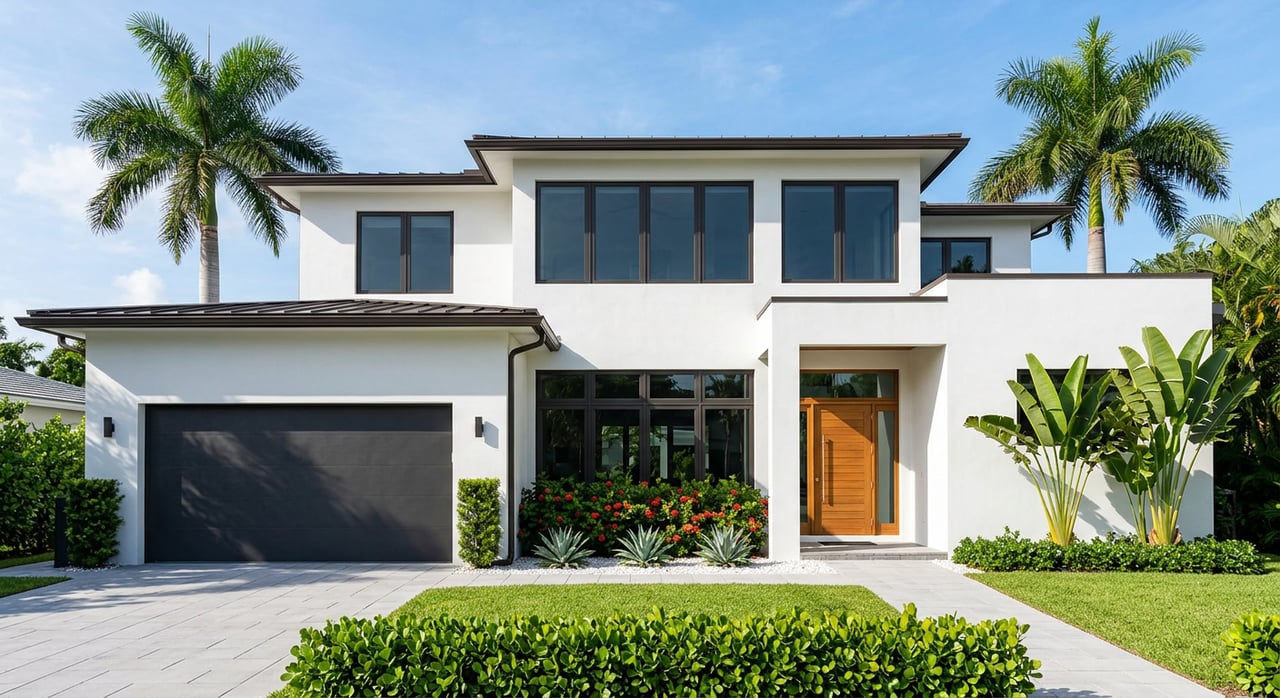
Thinking about a new home in Miramar but not sure if it is worth it right now? You are not alone. With local prices for many new builds landing near resale levels, incentives changing fast, and HOAs to factor in, it can feel hard to compare apples to apples. In this guide, you will learn what you can buy new in Miramar, how pricing and incentives work, what timelines and inspections to expect, and the key contract details to verify before you sign. Let’s dive in.
Miramar market at a glance
Miramar’s typical home values sit in the low to mid 500s. Recent snapshots show average values around $511,900 and median sale prices near $532,500 to $533,000. New construction listings often track close to that, with a median near $535,000, so you may find new and resale options in the same price window.
National reporting also notes that the historical “new home premium” narrowed in 2025 as builders used price trims, mortgage buydowns, and closing credits to reduce monthly payments. That is a big reason many Miramar buyers are taking a fresh look at new builds today. For context on these trends, see Realtor.com’s coverage of incentives and pricing shifts reported through PR Newswire via Barchart’s site in their piece on why new homes are now priced closer to existing homes than ever.
What you can buy new in Miramar
Miramar’s new construction mix includes estate single family homes in gated master plans, smaller lot single family, and townhomes. The right fit depends on how much space you want, your ideal move-in timeline, and how you value amenities and HOA coverage.
Estate single family: Marbella example
Marbella showcases estate-style living with larger homesites and community amenities. Builder and listing pages highlight plans around 2,300 square feet and homesites described in a 65' x 120' format, approximately 7,800 square feet, along with clubhouse and pool access. Explore the community on NewHomeSource and see a sample plan and lot dimensions on a Marbella listing page that details the Fairway plan and neighborhood format.
- Community overview: Marbella by CC Homes on NewHomeSource
- Homesite example and plan format: Marbella Fairway plan overview
Townhomes and workforce options: ParcView at Miramar
If you prefer a lower-maintenance footprint and a more accessible price point, ParcView at Miramar offers a city-supported, workforce-oriented community of 66 two-story townhomes. Floor plans range roughly 1,200 to 1,500 square feet, with pricing recently shown around $399,000 to $420,000 for eligible buyers. Learn more about eligibility and current availability on the official ParcView site.
- Project details: ParcView at Miramar official site
Standard finishes to expect
Many national builders in Broward package finishes to simplify choices. Common inclusions often feature impact-rated windows and doors where required, mid to upper-range kitchen appliances, quartz or granite counters, tile or laminate in main living areas, pre-wired tech, and basic landscaping. Luxury countertops, custom cabinetry, pools, and extensive landscaping are typically upgrades. For a feel of how this is presented locally, review Lennar’s “Everything’s Included” approach in Broward.
- Finishes overview: Lennar “Everything’s Included” in Broward
Costs, incentives and how new builds compare
Why new builds can pencil out now
Builders have leaned on incentives to make new homes more competitive. Temporary mortgage rate buydowns, closing cost credits, limited-time price reductions, and upgrade packages can put new builds on par with comparable resales in Miramar’s price band. National coverage shows this narrowing trend and explains how incentives often target quick move-in homes or specific financing packages.
- Incentive trends: New homes now priced closer to existing homes
Incentives to ask about
Ask each sales center for written details on:
- Mortgage buydowns and the starting rate by year if it is a 2-1 buydown.
- Seller credits to closing costs and exact dollar caps.
- Upgrade credits or model-home pricing on inventory homes.
- Expiration dates and whether incentives require the builder’s preferred lender.
Short-term savings can be meaningful, but a higher sale price or lender conditions may offset part of the benefit. Compare the APR and your total cost over the first 3 to 5 years, not just month one.
How to compare your monthly cost
Create a side-by-side with these line items so you can compare a new build against a similar resale:
- Price, down payment, interest rate and APR
- HOA dues and what they cover
- Estimated homeowners insurance and property taxes
- Any mortgage buydown schedule and the payment each year
- Any closing-cost credits that reduce cash to close
This keeps the focus on net monthly cost and cash to close, not just the list price.
HOAs and amenities
Most new communities include HOAs that cover shared amenities like a clubhouse, pool, playgrounds, landscaping, and private roads. HOA dues meaningfully affect your monthly cost, and reserve funding can impact long-term assessments. Ask for the current dues, coverage details, reserve status, and any known special assessments.
Timelines, permits and inspections
City permits in Miramar
Miramar’s Building Division notes that residential permits typically take about 15 business days once a complete application is submitted. The city follows the 2023 Florida Building Code for applications received on or after January 1, 2024. For master-planned communities, infrastructure and phased releases can add months before specific lots are build-ready. Review current procedures and inspection windows on the city’s portal.
- Permit guidance: City of Miramar Building Permits & Inspections
How long your build might take
For production builders, many plans run about 4 to 8 months from construction start to closing, depending on selections and supply timing. If you choose a quick move-in home, you could close within 30 to 90 days if it is already built. Custom homes usually take much longer when you include design and permitting. For general guidance on timelines, review this builder resource.
- Typical timeline ranges: How long does it take to build a home
Inspections you control
City inspections confirm code compliance. Your independent inspections focus on workmanship and punch-list items that improve your day-to-day experience. Common phases include:
Pre-drywall inspection to catch framing, mechanical, and insulation items before walls close.
Final walk-through inspection before closing to document items for the builder to address.
11-month warranty inspection to capture issues before the 1-year coverage expires.
Inspection guidance: New construction and 11-month inspections
Warranties and how to resolve defects
What a 1-2-10 warranty usually covers
Many builders use a 1-2-10 format. Year 1 typically covers workmanship and finishes. Year 2 covers major systems and distribution such as electrical, plumbing, and HVAC delivery. Years 3 to 10 focus on major structural defects, often via a third-party, insurance-backed program. Confirm the exact coverage, whether the structural piece is insurer-backed from day one, and if it is transferable on resale.
- Warranty basics: What a structural warranty covers vs a service agreement
Florida’s pre-suit defect process
Florida’s Chapter 558 sets out notice and inspection procedures before many construction-defect lawsuits can be filed. This process affects how and when major issues are resolved. If you encounter a significant defect, document it early, follow your builder’s warranty steps, and consult a qualified local attorney about Chapter 558 timelines.
- Overview: Navigating Florida Chapter 558
Why having your own buyer’s agent still matters
The on-site sales team represents the builder. You deserve your own advocate to align pricing, contract terms, and inspections with your goals. A local buyer’s agent can:
- Confirm whether the builder pays a cooperating commission and any conditions.
- Compare values and incentives across communities and lot locations.
- Put all promises in writing, including upgrades, timelines, and inclusions.
- Coordinate pre-drywall, final, and 11-month inspections and handle punch-list follow-up.
Here is a simple script for your first visit to a model center:
- “I am represented by [agent name]. Here is my buyer-broker agreement. Please confirm in writing how your on-site representative is compensated and whether you pay a cooperating broker commission. We will review all incentives and contract terms together.”
Quick buyer checklist
- Is the community finished or phased, and which phase is my lot in? What are the infrastructure and permit timelines for that phase? See the city’s permit guidance for context on processing and inspections.
- What is included in the base home? Which upgrades cost extra, and how are change orders priced and approved? Review a packaged-inclusions page for reference, such as Lennar’s “Everything’s Included.”
- What incentives are available today, and what are the exact conditions and expiration dates? See national reporting on builder buydowns, credits, and price strategies.
- What are the HOA dues, what do they cover, and are there any special assessments or a community development district?
- Who administers the warranty, is it a 1-2-10 format, is structural coverage insurance-backed, and is it transferable?
- When should I schedule pre-drywall, final, and 11-month inspections, and who will walk the punch list with me?
- Do I have my own buyer’s agent from the first visit, and is that noted with the sales center?
Ready to compare new build options to the best resales side by side? Reach out to the Ramona Bautista Team for clear pricing, incentive verification, and bilingual guidance tailored to your move in Broward and across South Florida.
FAQs
Are new construction homes in Miramar more expensive than resales?
- Many new builds in Miramar list near the overall city median, so pricing can be comparable to resales once you factor incentives, HOA dues, and financing terms.
How long does it take to build a new home in Miramar?
- Production builds often run 4 to 8 months from start to close, while quick move-in homes may close in 30 to 90 days and custom homes usually take much longer.
What inspections should I order for a Miramar new build?
- Schedule a pre-drywall inspection, a final inspection before closing, and an 11-month warranty inspection to document items while coverage is active.
What should I know about HOAs in new communities?
- Expect HOA dues that fund amenities and common areas; ask for a breakdown of coverage, reserves, and any known special assessments before you sign.
What does a 1-2-10 builder warranty usually include?
- Year 1 covers workmanship and finishes, Year 2 covers major systems, and Years 3 to 10 cover structural defects, often through an insurer-backed program.
Do I need my own agent when buying from a builder in Miramar?
- Yes. The on-site team represents the builder; your own buyer’s agent protects your interests on pricing, contracts, inspections, and incentives from day one.